
The story of Galon

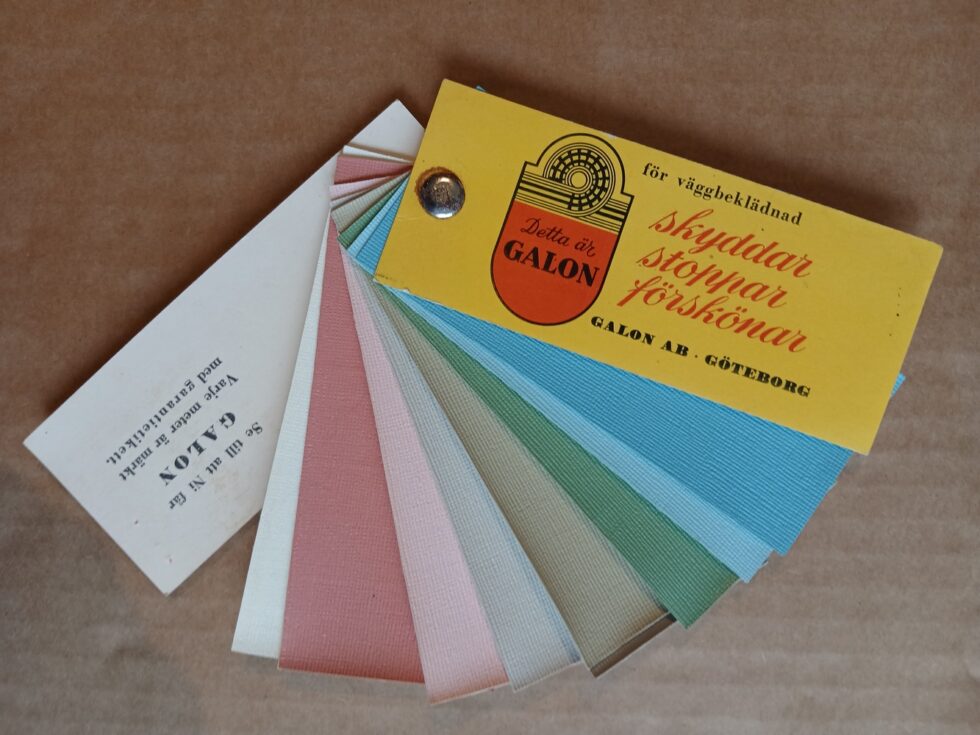
Everyone knows what galon is. Few know where the word comes from
It began in Gamlestaden in Gothenburg, at Gamlestadsvägen 14, where Gamlestadens
Konstläderfabrik (the Gamlestaden Artificial Leather Factory) made a fabric-backed plastic
that was about to get a name of its own.
The factory building was erected after a building permit in 1945, designed by the architect
Albert Gustafsson expressly for the processing of artificial leather. It was extended in 1951
to its present form, to drawings by Sture Högstedt.
The factory took the first two letters of its own name and the last three of nylon, the base
material of the day
GA plus LON became GALON. In time the company itself took the name
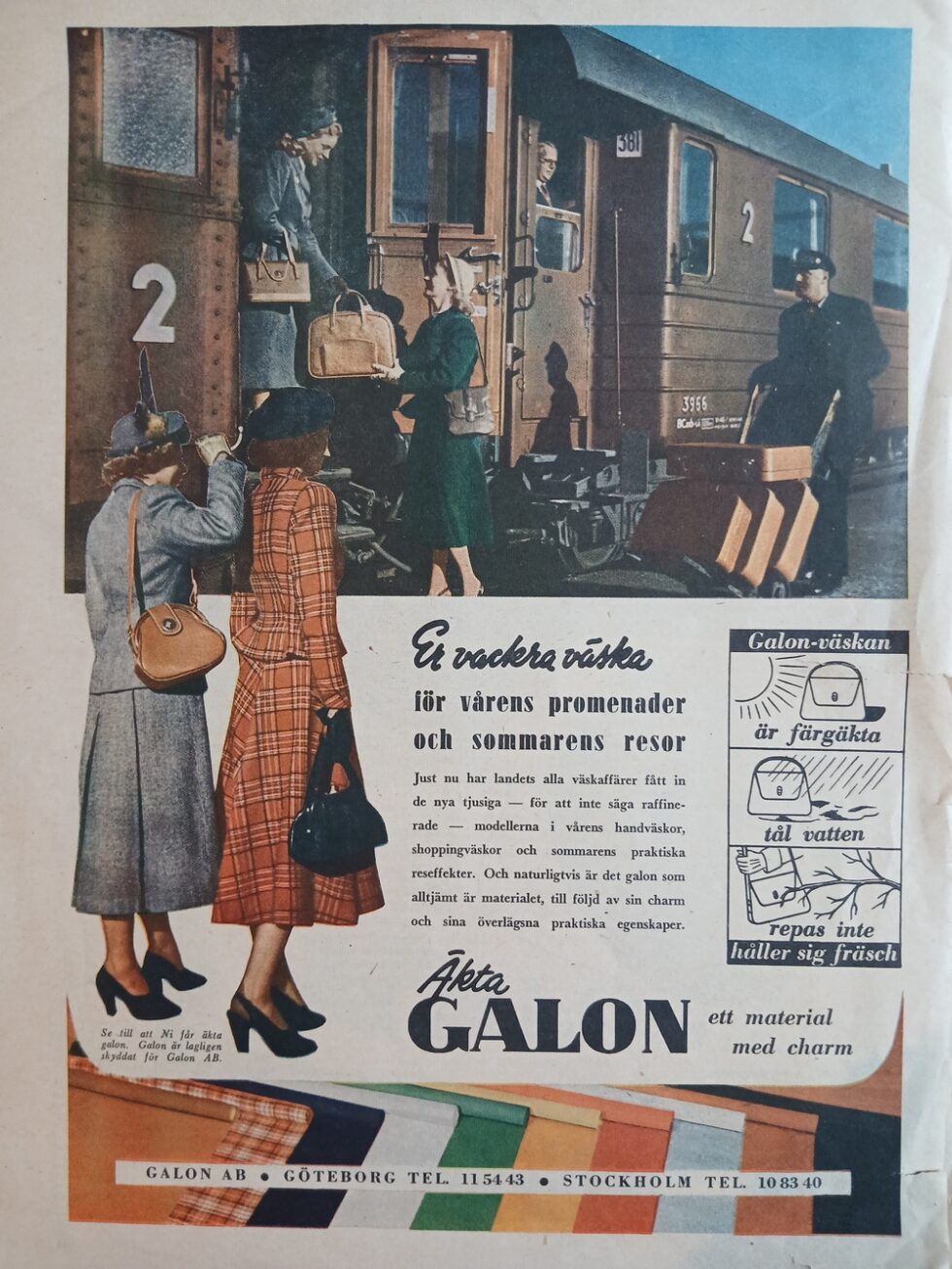
Galon AB, and in its advertising the message was clear — GALON® was a registered
trademark made by a single factory.
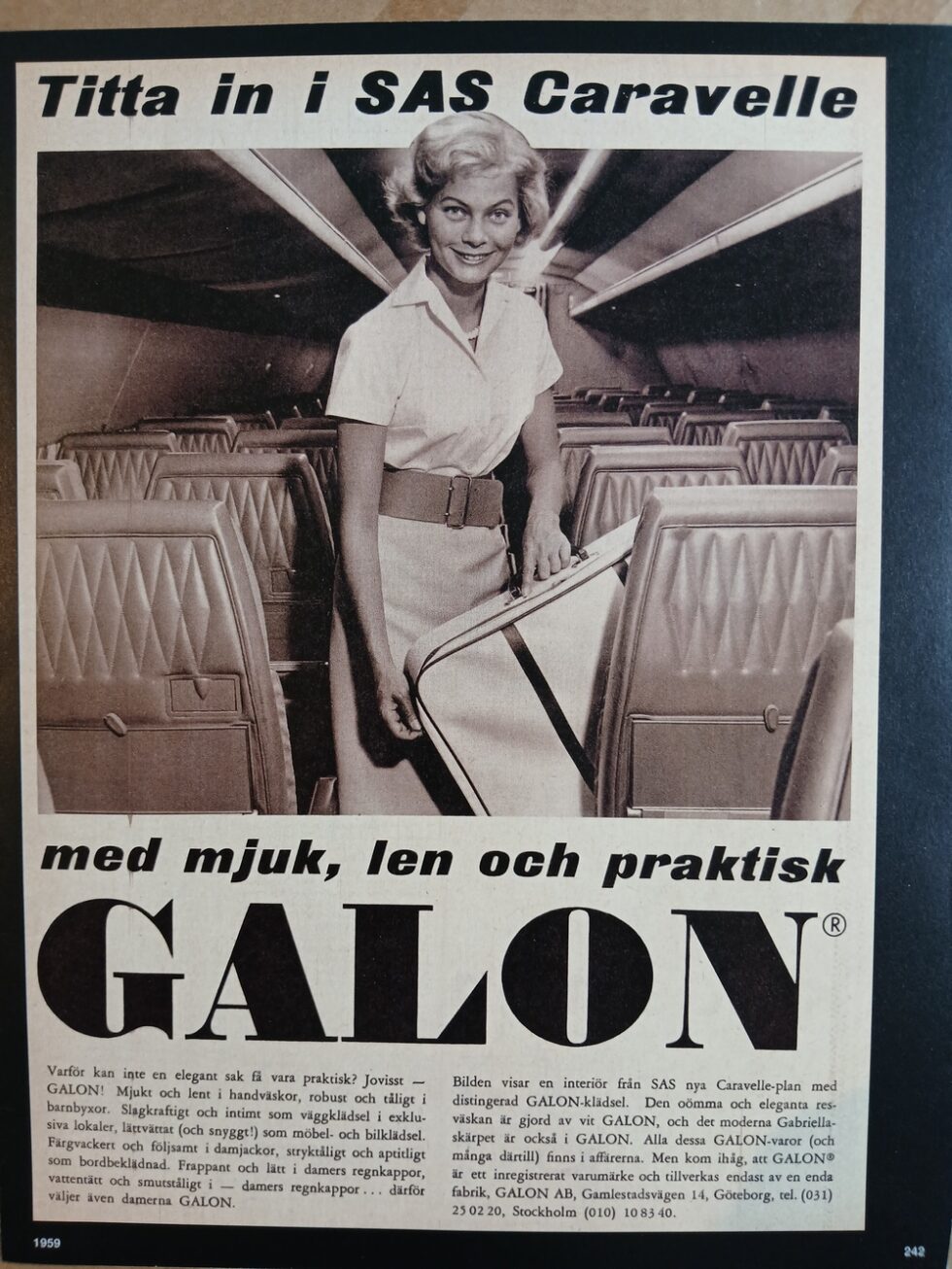
Anyone who wanted genuine galon knew where to turn.
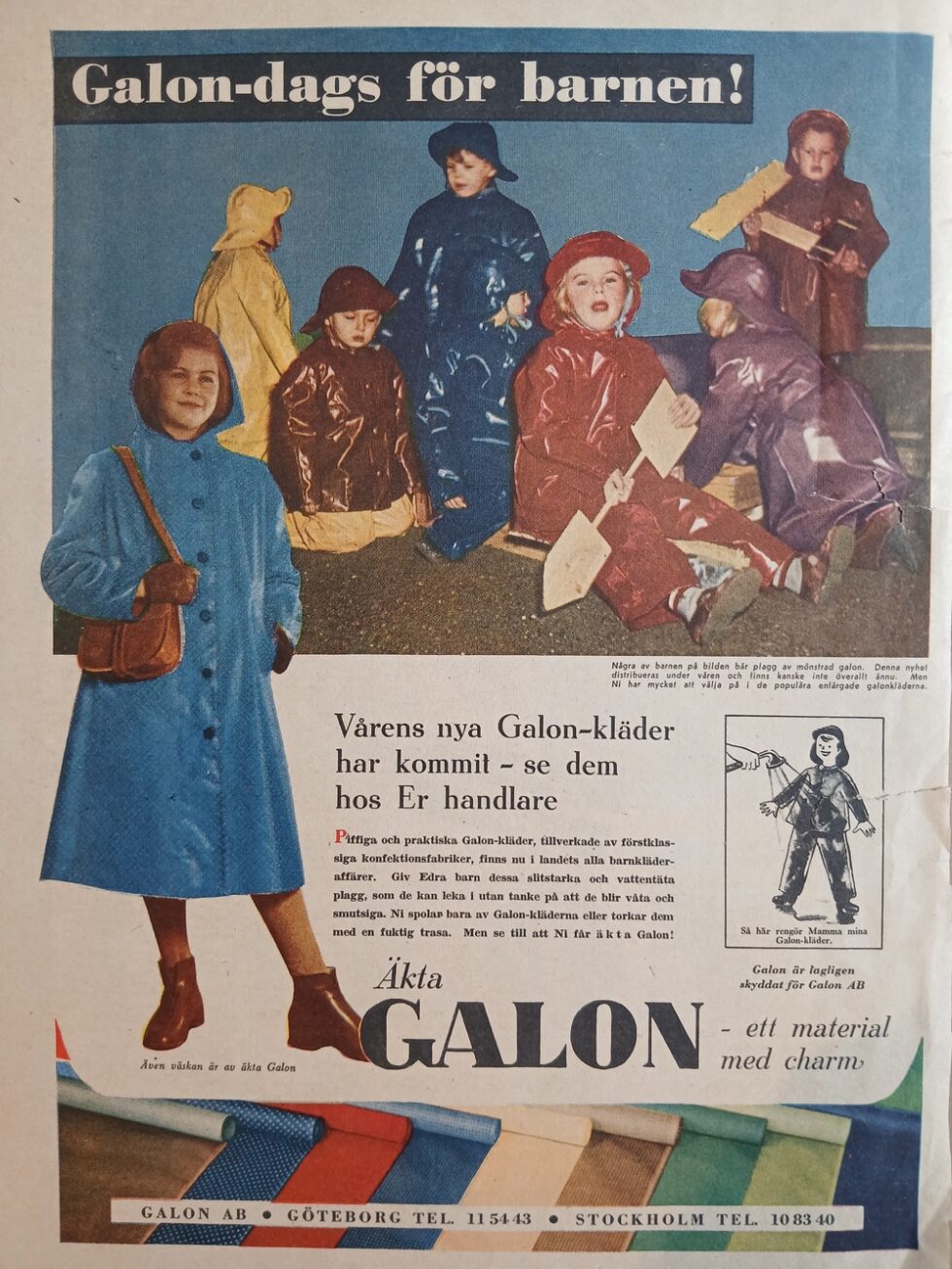
The material clothed Sweden. Car seats, bus seats and aircraft seats, bags, oilcloths and
furniture. It is also the rainwear that generations of children have worn at preschool ever
since.
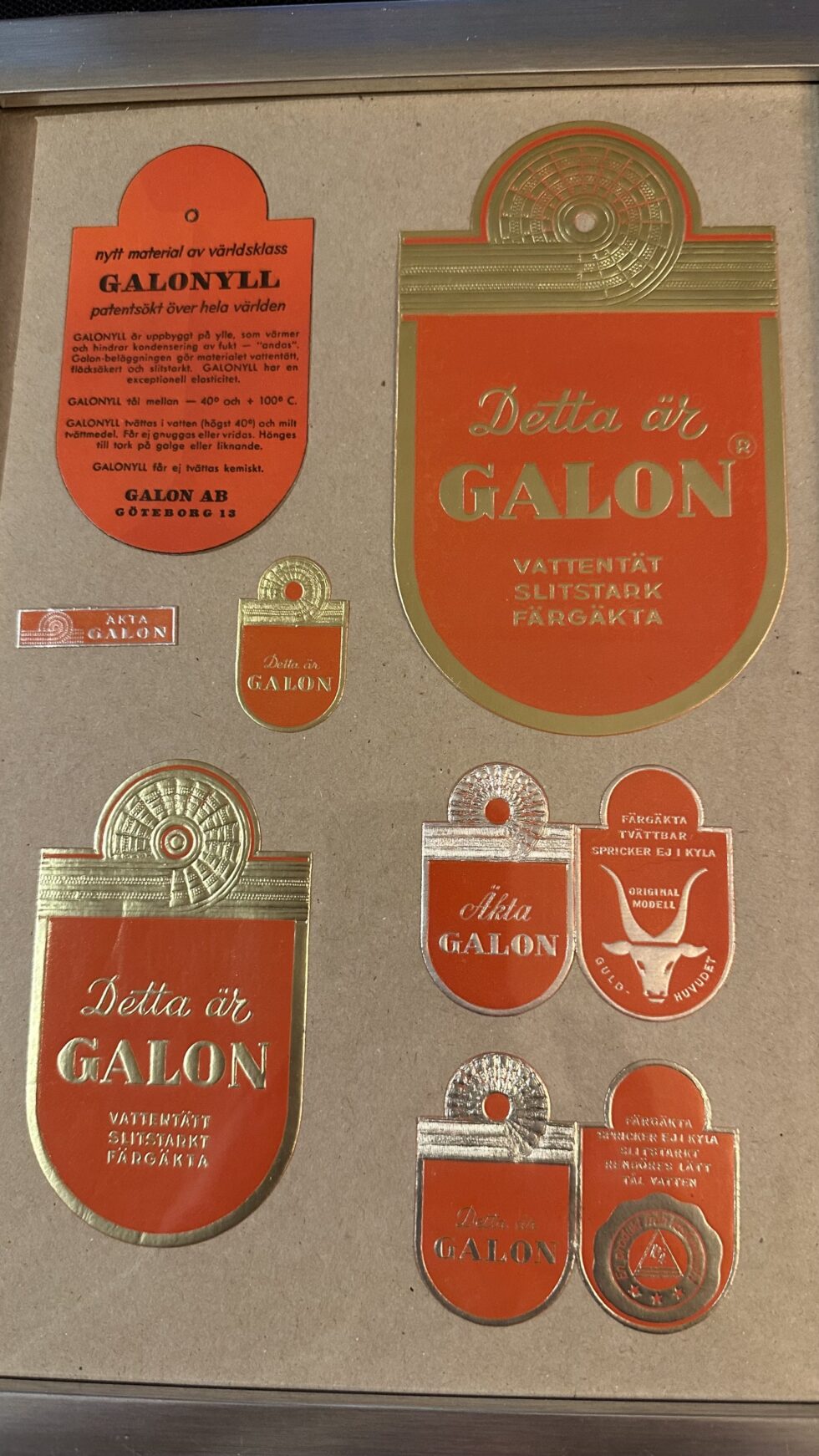
On the hang tags the promise came in three words
Waterproof, hard-wearing, colourfast.
The factory kept experimenting.
The range included Galonyll, a patent-pending material
built on wool, meant to keep the wearer warm and dampen condensation. This was the
factory’s own attempt to solve the same problem that today’s membrane makers wrestle
with — seventy years earlier.
Success soon demanded more space than Gamlestadsvägen could offer —
and the move was no retreat but proof of success
As early as March 1953, a new, modern factory stood ready
Byggnadstekniska Föreningen (the Building Technology Society) in Gothenburg paid a study visit to “Galon AB
— the new factory” that same spring.
Production moved to the emerging industrial area of
Högsbo in Västra Frölunda, to the address Frögatan 4.
In the 1971 edition of Sveriges Handelskalender (the Swedish Trade Calendar) the company is listed at this address, with
the telegram address Galonfabrik and the telex code GALON S.
The factory building still stands, in a way
When Köpcentrum 421 opened in November
2006, GT wrote that “the old galon factory has been turned into a modern shopping centre”,
next door to Pripps’ old premises.
The building’s address today is Lona Knapes gata, and its
largest tenant is ICA Maxi.
What happened to the old address?
By the mid-1960s Gamlestadsvägen had been left
entirely, and in 1965 new businesses began moving into the old premises.
In Högsbo the factory carried on at full steam.
In 1967 Director Bengt Flodin lectured at Byggnadstekniska Föreningen on the manufacture and use of Galon, primarily Bygg-Galon
— the construction industry’s galon — and that same autumn the society’s study visit went to the galon factory.
At the meeting, Högsbo Industriförening (the Högsbo Industrial Association) was formed: around a hundred companies that joined forces over shared problems such as transport links, pedestrian crossings and street lighting.
The association still exists today, under the name Högsbo-Sisjö Företagarförening (the
Högsbo-Sisjö Business Association).
By then the word had already left the factory and entered the language, and the know-how
would prove just as long-lived.
The know-how moves on
By then galon was not just a word.
It was one of Swedish industry’s strong brands.
When the business in the 1970s became part of the sphere of the investment company AB Fannyudde,
Galon AB was counted — alongside Jästbolaget (the yeast company) itself — among the
portfolio’s most important holdings.
The brand remained strong and profitable when the
sphere moved on to Pripps and later Beijerinvest.
In other words, it was an asset that owners
counted on — not a leftover that came with the purchase.
The legacy then split into two branches
The brand and the wallpaper side went into the wallpaper industry.
The GALON trademarks were later held by Eco-Tapeter and Boråstapeter. This is still visible today in the
trademark registers.
The coating business.
The very core of the know-how took a different path through
Swedish and international industry.
According to Bo Stage — who himself joined the business in 1986 and carries its history — it
was bought by Beckers Lay-Tech within the paint group Beckers, moved on to Perstorp
Components, and in 1996 into the American automotive group Collins & Aikman.
After four years in the American group, the business was sold again.
In 2000, Scandinavian Coating AB was founded in Gothenburg by two employees from the
business, Bo Stage among them.
The old calender
The company brought with it machines from the golden years of the galon era — amongthem a calender built in 1968 — and the production of woven fabric for rainwear and
protective equipment continued in Gothenburg into the 2000s.
It had been moved several times since it was new — first to the “new premises” in Högsbo,
then the few kilometres on to Sisjön.
The 1968 calender worked until 2024, when it was dismantled in Sisjön in Västra Frölunda
— in the same industrial belt to which the factory once moved from Gamlestaden, a couple of
kilometres from Frögatan.
A machine that served for 56 years, through a series of owners, from the golden years of the galon era into our own time.
In March 2026 Scandinavian Coating was declared bankrupt. That is where the history of Swedish galon manufacturing ends. Abruptly.
One detail in the chain is hard not to smile at
Perstorp, the group that for a time carried the galon heritage, is the same group that today
makes the renewable plasticiser used in Farmerrain’s fabrics.
Tradition and renewal run through the same hands — only the country and the place of fabric production have changed.
The trademark — and why we say “galon fabric”
The struggle against becoming an ordinary word began early.
The word spread so quickly that galon was already included in the 1950 edition of the
Swedish Academy’s word list (SAOL) in the sense of “fabric coated with plastic” — only a
little over a decade after the launch. In April 1951 Erik Lindeblad at Galon aktiebolag wrote
to the SAOL editor Pelle Holm and requested that the next edition state that Galon was a
registered trademark for the factory’s goods.
The Academy never agreed to it
Instead the meaning was struck from the 1973 edition, together with plexiglas and a number
of other brand words.
The company fought for its mark — but the word had already won.
Trademark protection for GALON ceased in time
The Swedish registrations were removed and an EU registration from 1996 expired in 2006.
This is what is sometimes called “the patent expired” — legally it was trademark protection,
not a patent.
By then the word had long since become a general term in Swedish, and once a word has
become general it cannot, under the main rule of trademark law, be newly registered for the
goods it denotes. It is the same rule that means nobody today can register thermos or
dynamite.
In 2013 GALON was instead registered as an EU trademark for clothing. EU trademarks are
examined by the EU’s authority EUIPO, in a system where the monitoring of obstacles to
registration rests to a large extent on market players themselves objecting and opposing —
and where a word’s everyday meaning in an individual language is not always caught as in a
national examination.
Today’s Galon® is a PU material from another manufacturer, with no connection to the
factory in Gamlestaden or to what was once called genuine galon.
That is why we at Farmerrain use the word as the language uses it: galonväv (galon fabric)
— plastic-coated textile, in our production PVC-coated fabric with a recycled base and
renewable plasticiser, double-welded and built to be repaired. It is no copy of the old. It is
the same idea, made better: waterproof, hard-wearing, colourfast.