
Farmerrain Circular

Farmerrain Circular
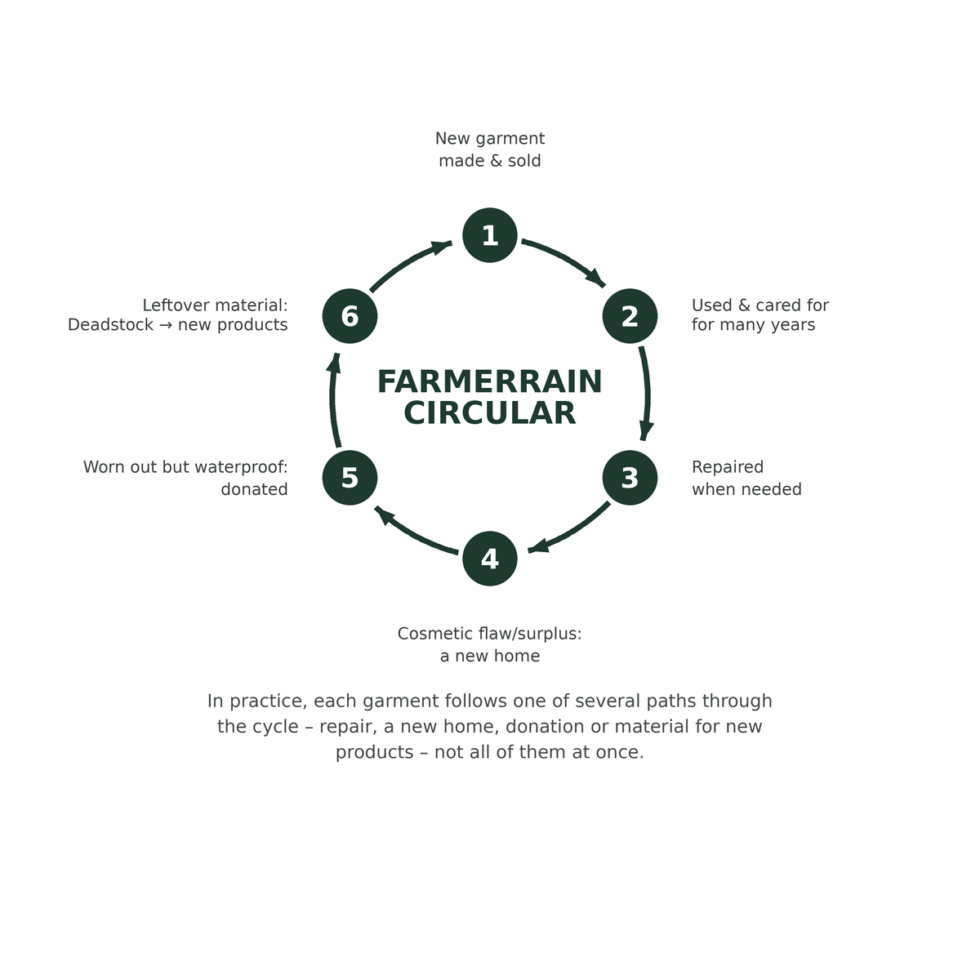
The best garment, environmentally speaking, is the one that never needs replacing. That’s why our
sustainability journey isn’t only about materials and the climate footprint per garment – it’s just as
much about extending every garment’s life after it’s sold: by making it repairable, by giving surplus
or cosmetically flawed garments a new home, and by turning leftover material into new products
Fact box: Repair
Yes. We want your clothes to last as long as possible, so we offer repair that extends the
garment’s lifespan. You can repair it yourself with our repair kits or button kits,
or send the garment to us.
We weld and repair
We weld and repair at our warehouse in Emmaboda, or forward it to the factory
when needed.
Once a garment has reached the end of its life, we’re happy to take it back so the
material can be recycled or reused properly at our warehouse in Emmaboda.
A growing repair range (coming)
We are currently expanding our repair range so that more people can repair at home, whatever the
type of damage. The range will include a repair kit with glue, a repair kit with a self-adhesive patch,
separate glue that works on both waders and rain garments, loose patches for rain garments, and
buttons and button sets. This is under development and will be rolled out gradually – exact launch
dates and prices will be set before publication.
Black Week – a sell-off with a purpose
Our Black Week isn’t about selling more – it’s about selling off what would otherwise risk being left
unused. On this occasion we sell showroom garments, sample garments used for photo and video
shoots, and returns that have been repaired or had a cosmetic flaw but are still fully functional. We
also sell off our discontinued items specifically on this occasion, together with small runs of odd
fabric remnants and older batches that haven’t sold out.
Donations to the Red Cross and Ukraine via Lions
Garments that for some reason don’t meet our own quality standards, but are still waterproof and
fully usable, we donate to charity rather than discard – to recipients such as the Red Cross and
humanitarian relief efforts in Ukraine, often via the Lions Club in Emmaboda, where the garments
can be put to immediate use. This happens several times a year, depending on availability, and we
have done it since the brand was founded in 2019.
Deadstock – nothing should go to waste
Making use of fabric that would otherwise be left unused is not a new idea for us. As early as 1995, we began working with the then Swedish owners of Grundéns in Uddevalla, and much of their older fabric became new garments under our brand. The idea has stayed with us ever since and is part of how we run our business: nothing should go to waste, and we do what we can to make use of what already exists.
Today the same work continues in our Deadstock, where leftover material and older batches become new, fully-fledged products instead of being discarded. You can read which materials this covers, where they were made and what they contain on the Our materials page.
Link: “Our materials”
The museum – the proof in practice
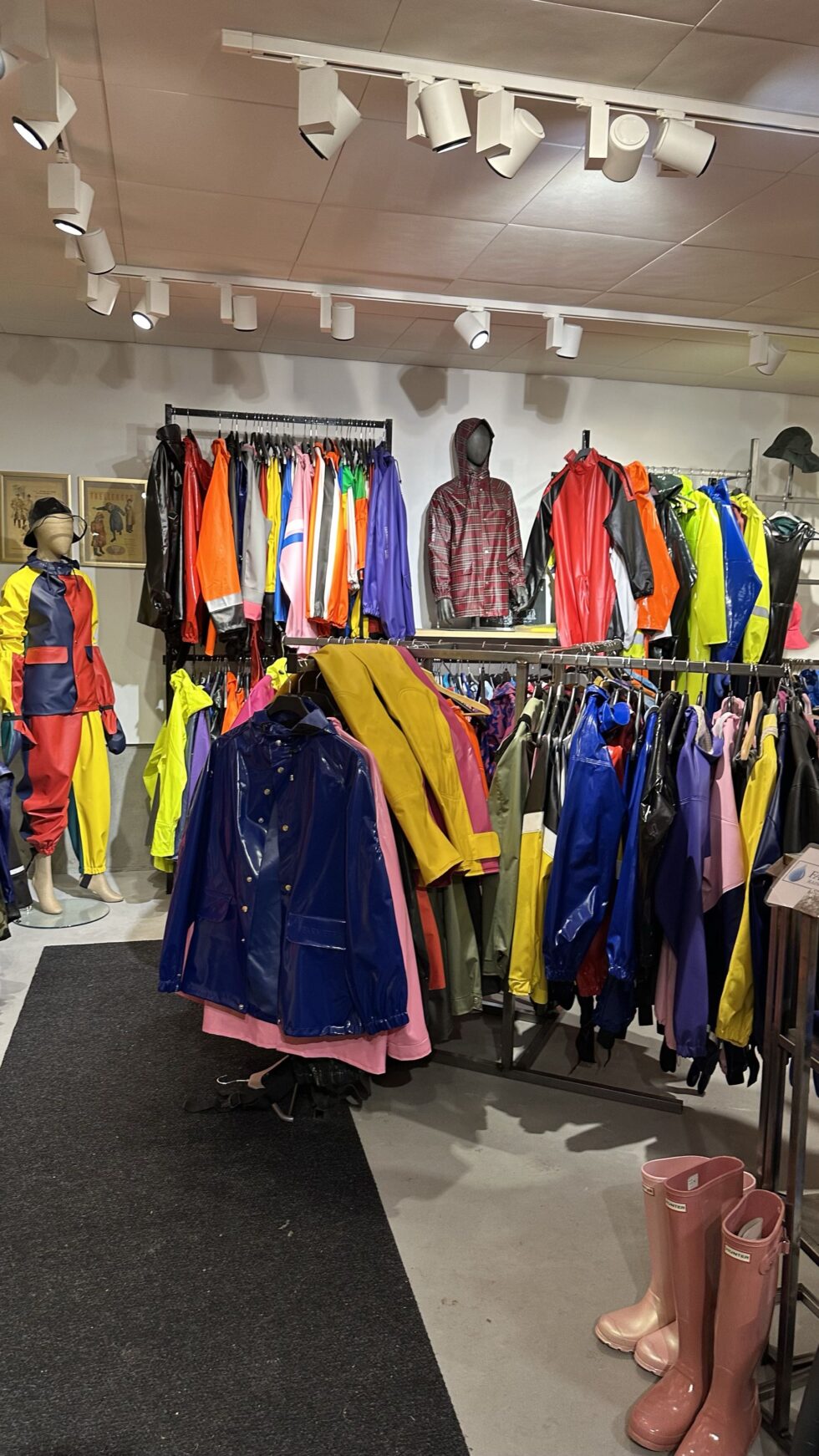
Our estimate of a 30-year technical lifespan isn’t plucked out of thin air. Farmerrain keeps its own
museum of older products in similar materials, several of which have lasted more than 50 years.
That is the practical background to the technical specification behind the 30-year estimate, and it is
documented in our third-party-verified Environmental Product Declaration (EPD-IES-0005125).