Completely waterproof
a water column of 20,000 mm, with welded seams on the vast majority of models


Biovinyl+
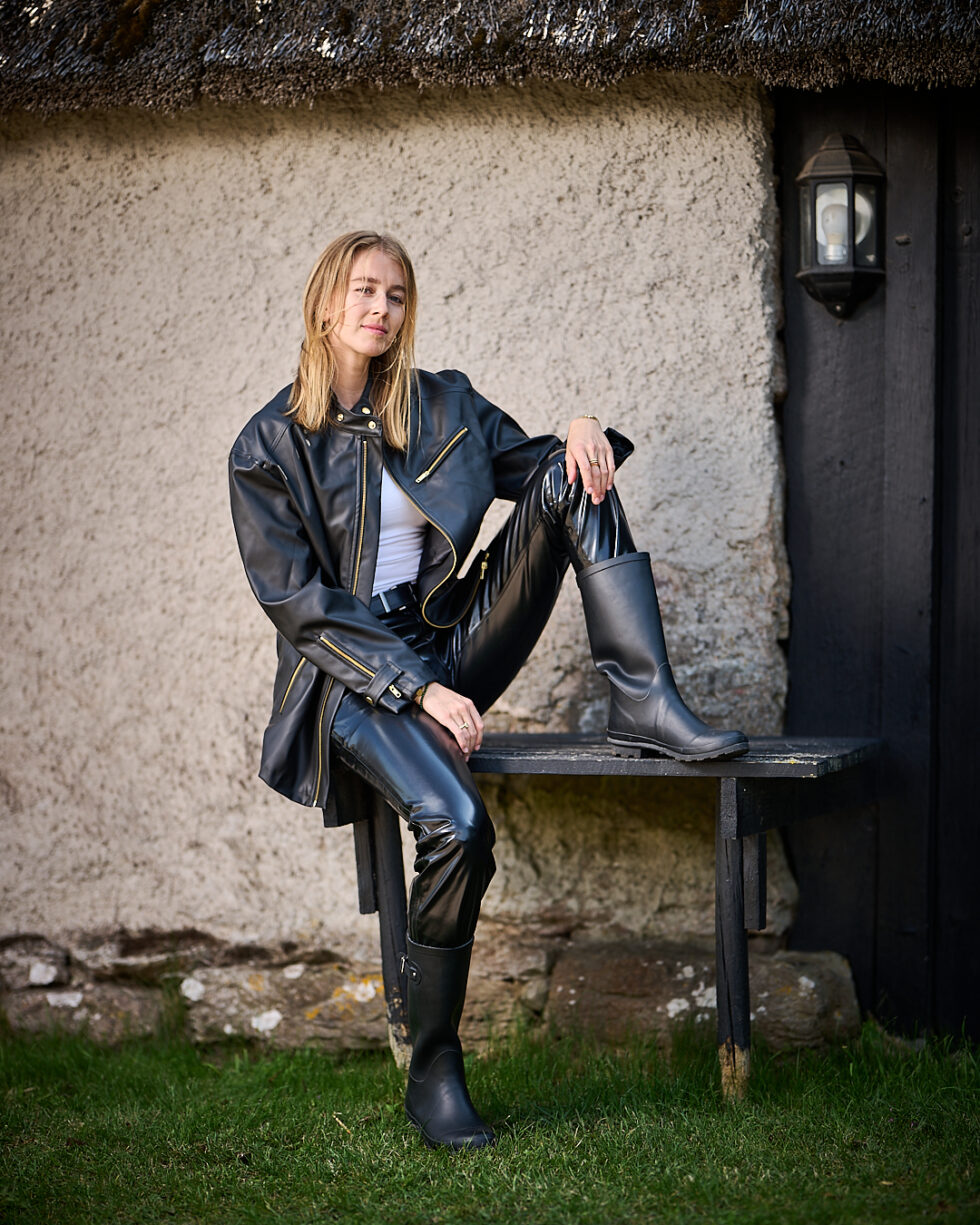
Biovinyl+ is the name of the material Farmerrain builds its rainwear from: a PVC fabric made from BIOVYN™ and plasticised with Pevalen™ Pro 100 — two raw materials linked to renewable biomass through certified mass balance, instead of relying solely on fossil feedstock. The result is the same proven properties galon fabric has always had — completely waterproof, hard-wearing, welded seams — combined with a plasticiser that is entirely free of phthalates.
What is Biovinyl+?
The PVC component is BIOVYN™ from INOVYN — the world’s first commercially available bio-attributed PVC, in production since 2021. Through certified mass balance, a share of renewable biomass is linked to the PVC that is produced, following the same accounting principle used for, for example, renewable electricity or bio-based plastics in other industries: the renewable feedstock is fed into a shared production process, and a corresponding quantity of the finished product is credited — attributed — as renewable, traceably, through a certified system. The substitution of fossil feedstock with renewable biomass is RSB-certified at 100 percent, the biomass doesn’t compete with the food chain, and according to INOVYN, BIOVYN™ delivers a greenhouse gas saving of over 90 percent compared with conventionally produced PVC.
The plasticiser component is Pevalen™ Pro 100 from Sweden’s Perstorp — entirely free of phthalates, and made from 100 percent renewable or recycled carbon under the same mass-balance principle, certified through ISCC PLUS. According to Perstorp’s own figures, the plasticiser has roughly an 80 percent lower carbon footprint (cradle to gate) than its fossil equivalent. Since the plasticiser, by Farmerrain’s own calculation, accounts for roughly 40 percent of a garment’s total climate footprint, that choice alone is one of the single most important factors in the material’s overall environmental performance.
Properties
a water column of 20,000 mm, with welded seams on the vast majority of models
Free of phthalates and PFAS
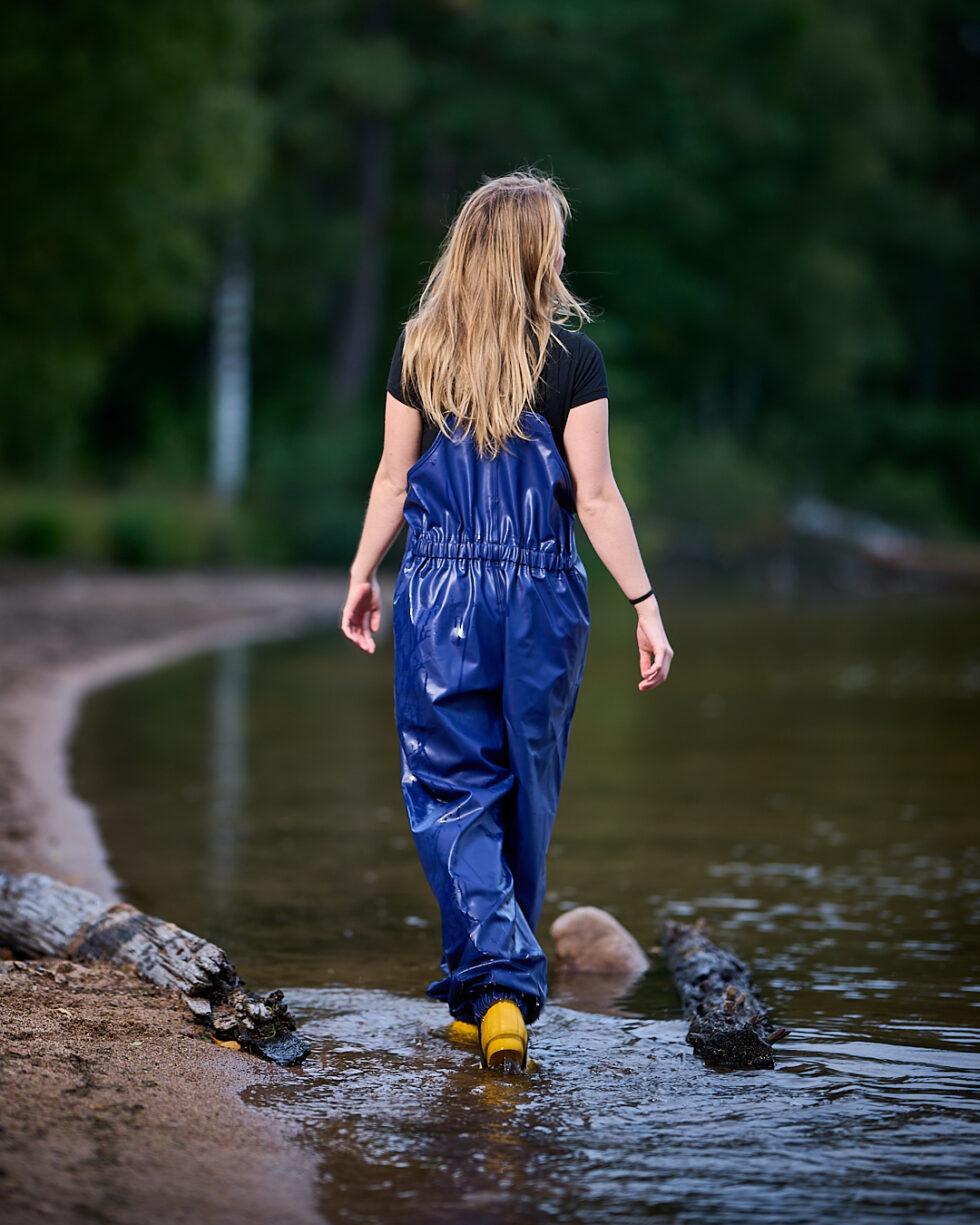
Never needs reproofing — the waterproofness lies in the material itself, not in a surface treatment that wears off.
Resistant to oil and cold.
Climate footprint and verification
Farmerrain’s sailing jacket has a third-party-verified Environmental Product Declaration (EPD-IES-0005125) under the international standard ISO 14025, reviewed by Sweco Environment: 5.82 kg CO2e per jacket, cradle to grave. The declaration is valid until January 2027, and a new measurement is underway to capture material changes since the last one.
According to the same declaration, the jacket is made of 88 percent bio-based PVC and 12 percent recycled polyester from PET bottles (the backing fabric). The material contains no phthalates and no substances on the EU’s candidate list of substances of very high concern (SVHC), the water column is above 20,000 mm, and the material is Oeko-Tex tested.
The collaboration with Perstorp was described in a case study published on 26 August 2026. Jonas Carlsson: “With proper care, our rainwear can last at least 30 years.” Carola Carlsson: “We focus on improving our own operations rather than comparing ourselves to others.”
Perstorp's own tests of Pevalen™ Pro 100 show a softer feel, better fabric drape and retained flexibility in the cold compared with conventional plasticisers. Farmerrain's own field tests have shown unchanged properties down to around −30 °C. The garments are made and tested to perform well down to −30 °C — this is not a guarantee, and −50 °C is not promised.
The technical lifespan is calculated at 30 years. With proper care, repair when needed and reasonable use, a Biovinyl+ garment can last at least 30 years. Heavily used garments, however, will find it difficult to reach this lifespan in practice.
The fact that the material is phthalate-free increases the possibility that it can be recycled, compared with PVC containing phthalates or other substances that require special handling. We also always accept worn-out Farmerrain garments at our warehouse in Emmaboda, so the material can be recycled or reused properly.
Condensation and ventilation
Like all other completely waterproof, plastic-coated fabric, Biovinyl+ doesn’t let water vapour through. During high physical activity, moisture can therefore condense on the inside of the garment — that’s a characteristic of the material, not a defect. The solution is ventilation rather than a more waterproof fabric, and several of Farmerrain’s models are therefore built with mechanical ventilation: the Hunter jacket has vents on the chest and back, the Adventure anorak and the Trenchcoat 2.0 have back ventilation, and the Hunter waist trousers and the Matching Kid waist trousers have ventilation mesh.
Models
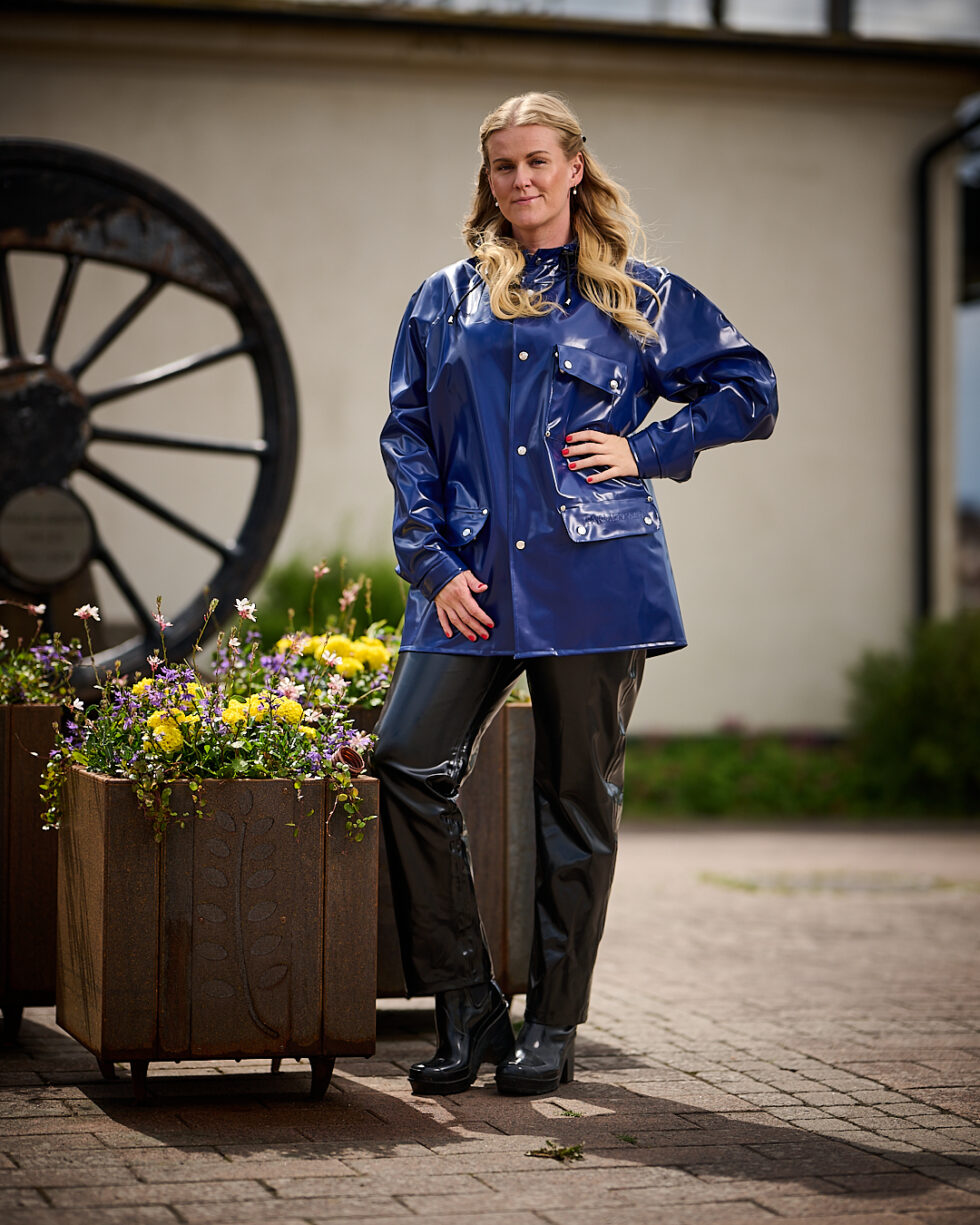
Biovinyl+ is used across large parts of Farmerrain’s own range of jackets, trousers, capes and overalls. One exception is the waders, which are not made in Biovinyl+.
waist ventilation
Biovinyl+ compared with traditional PVC
Chemically, Biovinyl+ is still PVC — polyvinyl chloride — just as traditional galon fabric has always been, and the fundamental properties that have made the material the first choice in fishing, farming and professional life for over a hundred years remain the same: total waterproofness, high abrasion resistance, and seams that can be welded into a homogeneous, durable joint. The difference lies in two stages of the manufacturing chain. The first is the PVC feedstock itself: traditional PVC is made exclusively from fossil naphtha, whereas the BIOVYN™ in Biovinyl+ is linked to renewable biomass through certified mass balance — an accounting system in which a quantity of renewable feedstock is fed into a shared production process, and a corresponding quantity of the finished PVC is credited as renewable, traceably, through third-party certification. The substitution of fossil feedstock is RSB-certified at 100 percent and the biomass doesn’t compete with the food chain; according to INOVYN, this gives BIOVYN™ a greenhouse gas saving of over 90 percent compared with conventionally produced PVC. This doesn’t necessarily mean that every individual polymer molecule in the specific fabric that becomes a Farmerrain garment physically originates from biomass — mass balance is an established, certified method for introducing renewable feedstock into an existing production chain, widely used across the chemical industry, not a guarantee of physical traceability molecule by molecule. The second stage is the plasticiser, where the difference is more concretely measurable: traditional PVC is often plasticised with phthalates or chlorinated paraffins, substances subject to growing chemical regulation and which can complicate future recycling, whereas Biovinyl+ is plasticised with Pevalen™ Pro 100 — a polyol ester entirely free of phthalates, made from renewable or recycled carbon under the same mass-balance principle, with roughly an 80 percent lower carbon footprint than its fossil equivalent according to Perstorp’s own figures. Taken together, then, Biovinyl+ is not a different material from PVC, but the same material made with a feedstock chain linked to renewable sources and with a
plasticiser whose chemistry and climate footprint differ measurably and demonstrably from the industry standard.
Ja. Utöver PVC-råvaran BIOVYN™ (kopplad till förnybar biomassa genom certifierad massbalans) och den ftalatfria mjukgöraren Pevalen™ Pro 100, är undertyget i alla våra egna tygkvaliteter gjort av 100 % återvunnen PET-polyester – och har alltid varit det, redan i den äldre Biovinyl-generationen innan Biovinyl+ fanns. Undertyget utgör omkring 12 % av en jackas totalvikt (enligt vår EPD för seglarjackan); resten är PVC-beläggning – men den delen av tyget är i sin helhet återvunnen.
På vår fördjupade sida om Biovinyl+, där vi går igenom BIOVYN™, Pevalen™ Pro 100,
massbalanscertifieringen och jämförelsen med traditionell PVC i detalj.
Nej. Biovinyl+ används i stora delar av det egna sortimentet, men till exempel vadarbyxorna görs inte i Biovinyl+. Kontrollera alltid materialangivelsen för respektive plagg.
Materialet är helt tätt och släpper därför inte igenom vattenånga — vid hög aktivitet kan fukt kondensera på insidan. Vid hög aktivitet bör du kolla på ett mekaniskt ventilerat plagg tex Hunter-jackan, Adventure-anoraken, Trenchcoat 2.0, Hunter midjebyxa och Matching Kid midjebyxa har mekanisk ventilation inbyggd för att hantera det.
Kemiskt är det samma material — PVC — men råvarukedjan och mjukgöraren skiljer sig. Se det utförliga stycket ”Biovinyl+ jämfört med traditionell PVC” längre ner på sidan för hela jämförelsen.
Att materialet är ftalatfritt ökar möjligheten att det kan återvinnas. Vi tar också alltid emot
uttjänta plagg på vårt lager i Emmaboda för återvinning eller återbruk.
Tvätta inte i onödan, vinylplagg är lätta att hålla rena. Rengör i första hand med en fuktig trasa
och ljummet vatten, utan tvättmedel. Vid mer smuts kan du använda ofärgad såpa. Behöver
plagget maskintvättas, tvätta i 40 °C utan sköljmedel, gärna ut och in. Torktumla aldrig, utan låt
det lufttorka hängande. Veck kan strykas bort försiktigt på låg temperatur från insidan, med ett
tyg emellan. Förvara inte ljusa och blanka plagg mot mörka färger, läder eller konstläder,
eftersom de kan ta färg.
Med rätt skötsel kan ett plagg i Biovinyl+ hålla i minst 30 år. Ja. Vi vill att dina kläder ska hålla så
länge som möjligt, och därför erbjuder vi lagning som förlänger plaggets livslängd. Du kan laga
själv med våra reparationskit eller knappkit, eller skicka plagget till oss. Vi svetsar och reparerar
på vårt lager i Emmaboda, eller skickar det vidare till fabriken vid behov. När plagget har nått
slutet av sin livslängd tar vi gärna emot det, så att materialet kan återvinnas eller återbrukas på
rätt sätt på vårt lager i Emmaboda.
Plaggen är gjorda och testade för att fungera bra ner till −30 °C, enligt Farmerrains egna
fälttester. Det är ingen garanti, och −50 °C utlovas inte.
Det betyder att en mängd förnybar biomassa eller återvunnet kol matas in i en delad
produktionsprocess, och att en motsvarande mängd av den färdiga produkten sedan tillskrivs
som förnybar — spårbart genom ett certifierat system (ISCC PLUS för Pevalen™ Pro 100). Det är
en etablerad, certifierad redovisningsmetod som används brett inom kemiindustrin, snarare än
ett påstående om att varje enskild molekyl fysiskt kommer från biomassa.
Nej. Mjukgöraren Pevalen™ Pro 100 är helt fri från ftalater, och materialet innehåller inte PFAS.
Enligt vår miljövarudeklaration innehåller materialet inte heller några ämnen på EU:s
kandidatförteckning över särskilt farliga ämnen (SVHC), och det är Oeko-Tex-testat.
Biovinyl+ är vårt eget regnklädesmaterial. Det görs av BIOVYN™, världens första kommersiellt
tillgängliga bioattribuerade PVC, och den ftalatfria mjukgöraren Pevalen™ Pro 100 från svenska
Perstorp. Resultatet är helt vattentätt, fritt från ftalater och PFAS och behöver aldrig
impregneras. Det är fälttestat ner till −30 °C och byggt för att hålla.
Biovinyl+ är Farmerrains eget regnklädesmaterial. Det bygger på BIOVYN™ från INOVYN, världens första kommersiellt tillgängliga bioattribuerade PVC, där den fossila råvaran har ersatts av förnybar biomassa. Mjukgöraren är Pevalen™ Pro 100 från svenska Perstorp, en ftalatfri mjukgörare med 100 procent förnybart kolinnehåll. Enligt Perstorp har den omkring 80 procent lägre koldioxidavtryck än motsvarande fossila mjukgörare. Både PVC:n och mjukgöraren följs upp enligt certifierad massbalans, och mjukgöraren är ISCC PLUS-certifierad. Materialet är fritt från ftalater och PFAS, behöver aldrig impregneras och har en tredjepartsgranskad miljövarudeklaration (EPD). Det ger samma skydd som traditionell vinyl: helt vattentätt, tåligt mot olja och kyla och gjort för att hålla i många år.
Båda är plastbelagd textilväv. PVC ger en tjockare, tåligare beläggning som väger mer; PU ger en tunnare, lättare och smidigare. PVC håller generellt längre vid hårt bruk, PU är bekvämare vid lätt bruk.
Generellt ja, om de innehåller ftalater. Ftalater är inte kemiskt bundna till plasten utan vandrar sakta ut ur materialet under hela dess livstid — ju äldre plagget är, desto mer har redan läckt ut, vilket också innebär att kvarvarande halter fortsätter vandra ut i luft, damm och vid hudkontakt. Ett äldre PVC-plagg (eller ett second hand-fynd) har alltså statistiskt sett redan avgett mer ftalater än ett nytt. Det gäller inte Farmerrains egna material, eftersom de är ftalatfria oavsett ålder — men är relevant att känna till för PVC-produkter i allmänhet.